

Zero-Latency Cloud Apps: The Tech That Will Make Your Local Hard Drive Obsolete
We’ve all heard the prediction that “everything will live in the cloud,” but the reality never quite matched the hype. Slow syncing, buffering, laggy interfaces—none of it felt ready to replace the reliability of a good old-fashioned hard drive. But that’s starting to change. With new networking tech, smarter algorithms, and distributed computing models, zero-latency cloud apps are on the horizon—and they’re shaping up to be fast enough to make local storage feel downright ancient.
Ultra-Fast Edge Networks Take Over
Edge computing is the key to getting cloud apps to respond as quickly as the software installed on your laptop. By placing compute resources physically closer to users, companies can slash the time it takes for data to zip back and forth. Many developers and tech enthusiasts exploring cloud-based workflows look at platforms as early hints of how high-speed distributed systems might evolve. When data lives right at the network’s edge, apps load instantly, files feel local, and lag becomes almost invisible.
Predictive Caching Makes Every Action Feel Immediate

Zero-latency cloud apps won’t rely solely on raw speed—they’ll depend on clever anticipation. Predictive caching algorithms can study your behavior and pre-load the files, features, or tools you’re most likely to use next. Imagine opening a massive project file and having it ready before you even click. These systems shrink perceived latency to nothing, creating an experience where the cloud feels not just as fast as a local drive but sometimes faster.
Streaming Software Becomes the Norm
Today, we stream movies …
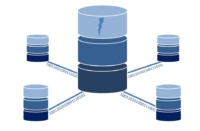
All you need to know about file hosting services
The digital revolution presents endless opportunities to us. As such, there are many technical terms associated with these developments, most of which remain unknown. One such term is file hosting. On that note, this article takes a closer look at file hosting and its benefits.
What is file hosting?
 As the name suggests, file hosting is a data storage methods that use the Internet. Most of us are accustomed to saving files on their hard disk drives. As much as it might be of help, it also comes with its fair share of limitation. For instance, storing on your local device means that you cannot access those files while on another device. File hosting addresses this shortcoming by providing storage services and uncompromisable access to your documents.
File hosting services are mainly used for story documents that are frequently required or shared documents. Since file hosting services are hosted on the internet, you can always get that important document whenever you want. As a reminder, file hosting storage is not limited to documents files. They can also be used to store zip files, media files and other types of data.
How does it work?
Most file hosting service providers have a hosting website. As such, each user is given unique password and username, which are used to access their accounts. It is only after you access or login to your account when you will be able to store or view your files. Also, the user is given the power to …


